Address
Global Remote Team
.avif)
 Verified Sustainable Travel Infrastructure — Trusted by Hotels & Brands Worldwide
Ratione doloribus optio minus cum ab. Nostrum rerum minus sapiente eveniet fuga quos tenetur Bicycle rights taxidermy knausgaard, 3 wolf moon schlitz kombucha freegan ugh ethical kogi Déjà en recherche de nouvelle inspiration pour la prochaine collection, qui sera toujours inspirée de ses origines suisses de son savoir-faire an nouveau matériel arrive!




By JecoLuxe Team
April 15, 2026
18 min read
Complete Guide
Eco luxury travel in 2026 means extraordinary experiences that actively restore the destinations you fall in love with — Jecoluxe
You have worked hard, you deserve a spectacular holiday, and you care deeply about the world you are taking that holiday in. For a long time, those three things felt like they were in conflict with each other. The most breathtaking destinations were often the most fragile. The most luxurious hotels were frequently among the most resource intensive. And the experience of truly switching off seemed to require an enormous environmental price.
That tension is dissolving. In 2026, the fastest growing and most exciting segment of the entire travel industry is eco luxury travel, a category in which extraordinary comfort, impeccable service, and genuine environmental responsibility are not competing values but are deeply interconnected. The finest hotels in the world are now the ones leading on sustainability. The most memorable travel experiences are the ones that connect you meaningfully to the natural world. And the travelers making the most thoughtful choices are the ones enjoying the richest experiences.
This is the definitive guide from Jecoluxe, the eco luxury travel platform connecting conscious travelers with the world's finest certified sustainable hotels and resorts. Whether you are planning your first conscious trip or deepening a commitment you have already made, this guide covers everything you need to know: how to think about eco luxury travel, how to choose the right destinations and hotels, how to reduce your travel footprint before and during your trip, and how to ensure that every pound, dollar, or euro you spend creates a genuine positive impact.
of luxury travelers say sustainability now influences their booking decisions
average room rate premium commanded by eco certified luxury hotels
dollar value of the global luxury travel market projected for 2026
The conscious luxury traveler of 2026 demands both impeccable experiences and genuine environmental responsibility — and the best hotels are delivering both
The phrase eco luxury travel has been used loosely for years, sometimes to describe a hotel that recycles its newspapers and calls it a day. In 2026, the definition has sharpened considerably, driven by more demanding travelers, more rigorous certification standards, and a hospitality industry that has realised sustainability is not a cost but a commercial advantage.
Genuine eco luxury travel rests on three pillars working in harmony. The first is environmental integrity: the property operates with a verified, measurable commitment to reducing its environmental footprint through energy efficiency, water conservation, waste reduction, and responsible sourcing. The second is social contribution: the hotel is a genuine economic partner to the community surrounding it, employing locally, sourcing locally, and investing in local wellbeing. The third is exceptional quality: the experience is genuinely luxurious, because eco travel that requires guests to sacrifice comfort or service is not a model that changes the industry at scale.
Can you show me your third party sustainability certification? Genuine eco luxury hotels are certified by independent bodies including GSTC, Green Key, EarthCheck, LEED, or Travelife. If a hotel describes itself as eco friendly but cannot name a certification body, approach its claims with appropriate caution.
Eco luxury travel is also increasingly distinguished from ecotourism and sustainable tourism by its emphasis on what we described as regenerative impact: the commitment to leaving destinations genuinely better than you found them. The hotels and destinations you will discover through Jecoluxe represent the very best of this emerging standard.
The most important journey in eco luxury travel does not happen on a plane or in a taxi from the airport. It happens in how you think about what a great trip actually means. Here is the mindset shift that separates travelers who experience eco luxury travel at its fullest from those who experience it only at its surface.
For a generation of travelers, the measure of a great travel year was the number of destinations visited. This model of travel, which treats destinations as items on a checklist, is increasingly at odds with both environmental reality and the deepest sources of travel satisfaction. Eco luxury travel invites you to slow down, stay longer, and build a real relationship with the places you visit. Fewer destinations experienced more deeply is almost universally more rewarding, and significantly less harmful.
The greatest eco luxury travel experiences of 2026 are not ones in which you sit by a beautiful pool and feel vaguely good about the hotel's recycling programme. They are ones in which you actively participate in something meaningful: a morning coral restoration session, a community market visit guided by a local who knows every vendor personally, a cooking class in which the ingredients were grown in the hotel's own biodynamic garden.
One of the biggest barriers preventing conscious travelers from fully committing to eco luxury travel is a well founded suspicion that much of what is marketed as sustainable is actually greenwashing. That suspicion is often correct. The solution is not to abandon the category but to develop the tools to distinguish genuine commitment from marketing theatre. Independent certification is the most reliable tool.
The most significant carbon decision in any luxury trip is the flight — choosing direct routes, flying less frequently and further, and investing in high quality offsets can dramatically reduce your impact
The single largest environmental impact most luxury travelers make is their flight. A long haul return flight generates between 1 and 3 tonnes of CO2 equivalent per passenger depending on the route and aircraft. No amount of towel reuse or refillable water bottles at the hotel comes close to offsetting that. So the most impactful decisions you can make about carbon happen before you even consider your accommodation.


The most effective carbon strategy for frequent luxury travelers is counterintuitive: take fewer trips, but make each one longer and more immersive. Two weeks in one extraordinary destination produces significantly less carbon than four long weekends in four different cities, and typically produces a far richer and more memorable experience.
Connecting flights can add 50 to 100 percent to the carbon cost of a journey. A non stop flight from London to Singapore produces significantly less CO2 per passenger than the same journey via Dubai or Doha. When booking, always check whether a direct option exists before accepting a connection.
Carbon offsetting is not a solution to aviation emissions, but it is a meaningful contribution when done well. Look for offsets verified by Gold Standard or Verra's Verified Carbon Standard. Be willing to pay more for higher quality verification. And offset the full journey including the return flight, not just one leg.
For shorter journeys, the luxury train is experiencing a remarkable renaissance. Rail journeys through the Swiss Alps, along the coast of Sri Lanka, through the Canadian Rockies, or across the Indian subcontinent offer experiences that compete with any flight-dependent destination, at a fraction of the carbon cost.
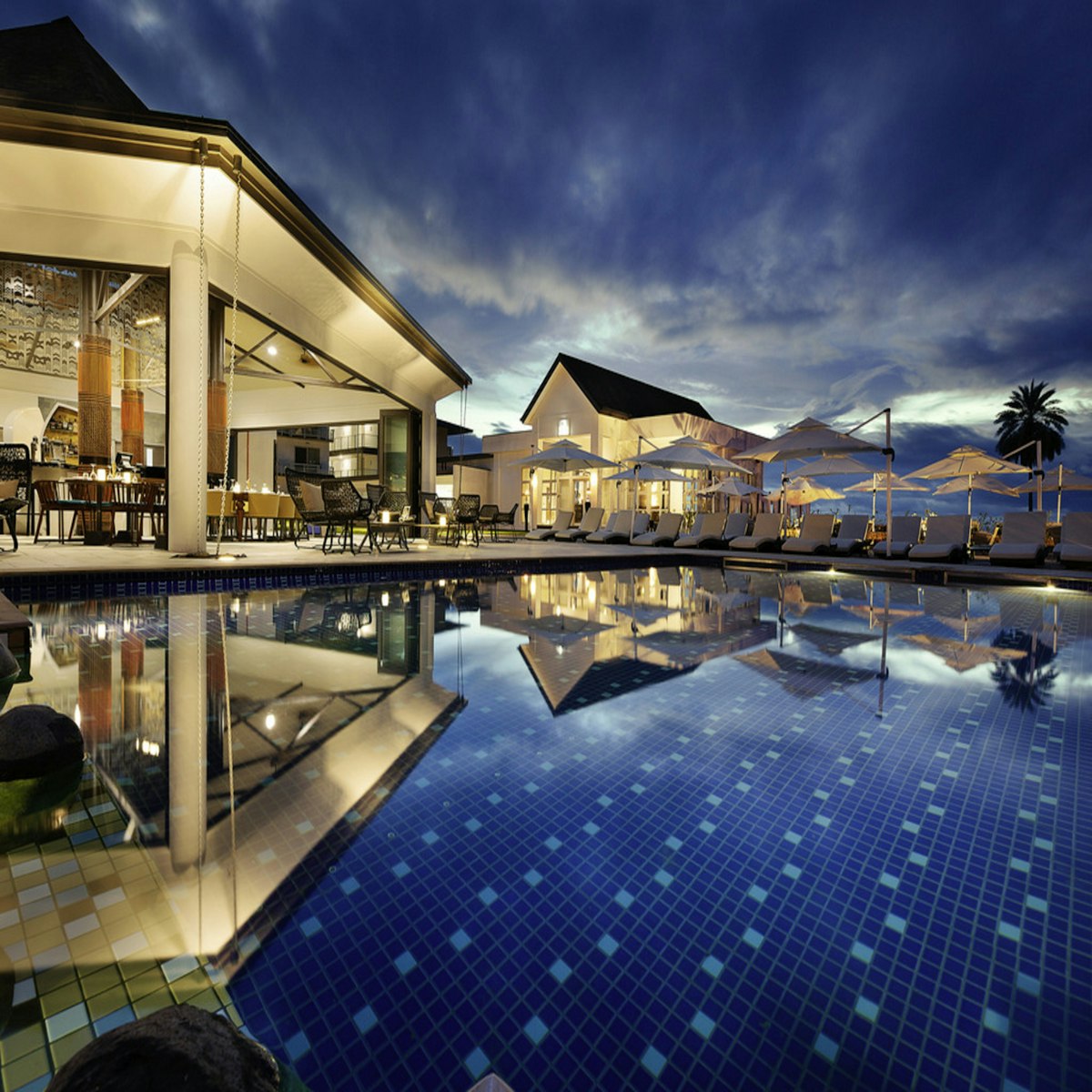
The finest eco luxury hotels use biophilic design, natural and reclaimed materials, and renewable energy systems that enhance rather than diminish the guest experience
Choosing a genuinely eco friendly luxury hotel requires moving past the marketing and into the substance. Here is the complete framework for evaluating any property before you book.
| What to Check | Green Signal ? | Red Flag ? |
|---|---|---|
| Third party certification | GSTC, Green Key, LEED, EarthCheck named | Vague eco friendly claims, no certifier |
| Energy source | Solar, geothermal or renewable energy | No mention of energy sourcing |
| Water management | Rainwater harvesting, low-flow systems | No water conservation data published |
| Food sourcing | Named local farms, organic garden on site | Generic food provenance claims |
| Staff employment | Majority hired from local community | No mention of local employment |
| Waste policy | Zero to landfill target, composting | Only towel reuse mentioned |
| Conservation programmes | Specific named projects with outcomes | Generic nature conservation mention |
| Transparency | Published sustainability report or data | No sustainability reporting |
Every property listed in the Jecoluxe sustainable hotel directory has been assessed against criteria aligned with this checklist before inclusion.
Authentic connection with local culture, artisans, and communities transforms a luxury holiday into a genuinely life-changing experience
The environmental dimension of eco luxury travel receives most of the attention. But the social dimension, your relationship with the communities and cultures of the places you visit, is equally important and often the source of the most powerful travel memories.
Cultural understanding takes time. A 48-hour stopover in Kyoto or Marrakech allows you to see the surface of a place. Three weeks in the same location allows you to begin to understand it. Eco luxury properties with strong community connections are particularly rewarding for longer stays.
The single most powerful thing you can do for a local economy as a luxury traveler is direct your spending toward locally owned businesses. Eat at family restaurants rather than hotel chains. Buy crafts directly from the artisans who make them. Use local guides rather than internationally franchised tour operators.
The best eco luxury hotels create structured opportunities for genuine cultural participation. Cooking classes with local chefs, weaving lessons with artisans, guided visits to conservation projects, and community market tours are not add ons to the luxury experience. They are the luxury experience.
The finest eco luxury safari experiences use tourism revenue to directly fund the conservation of the wildlife that makes them possible
For many luxury travelers, the pinnacle of eco travel is the wildlife experience: a private game reserve in Botswana, a mountain gorilla trek in Rwanda, a sea turtle nesting site on a Costa Rican beach. These experiences are extraordinary. They are also, when approached correctly, among the most powerful tools conservation has ever had.
Ethical wildlife tourism operates on a straightforward principle: if local communities earn more from living wildlife than from poaching or agricultural conversion of habitat, they will protect it. The communities surrounding Volcanoes National Park in Rwanda earn significantly more from gorilla tourism than from any alternative land use. The gorilla population has grown from fewer than 250 individuals to more than 1,000 as a result.
Beyond the big choices of destination, hotel, and flight, the texture of your daily behaviour during a trip adds up to a meaningful difference.
Research your hotel's certification and verify it through the certifying body's website
Calculate and offset your flight emissions using Gold Standard verified providers
Use refillable water bottles and refuse single use plastic everywhere
Eat at least one meal per day at locally owned restaurants
Participate in at least one conservation or community activity during your stay
Write detailed reviews to help other conscious travelers find genuine eco luxury properties
In many cases it is comparable in price to conventional luxury travel of the same quality tier. Some certified eco properties command a modest premium because of the investment they make in their sustainability programmes. However, many of the most prestigious eco luxury hotels in the world are priced similarly to uncertified competitors.
Ask for their third party certification name and check it on the certifying body's official website. Genuine certifications from GSTC recognised bodies, Green Key, EarthCheck, and LEED are all publicly verifiable. If a hotel cannot name a certification body or if the certification cannot be verified independently, treat its sustainability claims with appropriate caution.
Fly less and offset better. Aviation is the largest single source of carbon in most luxury travelers' environmental footprint. Taking fewer but longer trips, choosing direct routes, and investing in high quality verified carbon offsets makes a more significant difference than any combination of in-hotel sustainable choices.
The destinations that inspire the most extraordinary luxury travel experiences are also the most vulnerable to the cumulative impact of global tourism done thoughtlessly. The coral reefs, the rainforests, the arctic tundra, the savanna ecosystems, the ancient cultural traditions: all of them are under pressure.
Eco luxury travel in 2026 is not a compromise. It is not travel for people willing to sacrifice comfort for conscience. It is the highest expression of what travel can be: an encounter with the world that is as nourishing for the places you visit as it is for you.
Explore the world with intention. Start with Jecoluxe.

Certifications - Mar 20, 2026

Travel - Mar 28, 2026

Hotels - Apr 01, 2026

Travelers - Apr 05, 2026



Reader Comments
Sarah Mitchell
March 15, 2026
This guide completely changed how I approach travel planning. The hotel checklist is incredibly practical. Just booked my first GSTC-certified resort in Bali!
James Peterson
April 2, 2026
Excellent resource. The carbon offset section was eye-opening. I had no idea connecting flights could double the emissions!
Leave a Comment