Address
Global Remote Team
.avif)
 Verified Sustainable Travel Infrastructure — Trusted by Hotels & Brands Worldwide
JecoLuxe is the infrastructure layer that connects hospitality operations with measurable sustainability performance and guest-facing impact.




By JecoLuxe Team
April 17, 2026
25 min read
Complete Guide
Sustainability sells. That is precisely why so many hotels are faking it — and why knowing the difference matters more than ever.
You have spent considerable time choosing a hotel that does less harm. You have read the words eco-friendly, sustainable, and green-certified on the property's website. You have felt reassured. You have paid the premium. And then you have arrived to find a single token recycling bin in the lobby of a hotel that otherwise operates in exactly the same way as its less expensive, less virtue-signalling neighbours down the road.
This experience has a name. It is called greenwashing, and it is one of the most widespread and damaging problems in the luxury travel industry today. The good news is that it is entirely detectable — if you know what to look for. This guide gives you everything you need to tell the difference between a hotel that is genuinely committed to environmental responsibility and one that is committed primarily to appearing that way.
We have built Jecoluxe specifically to solve this problem: every property in our directory has been independently verified against recognised certification standards before listing. But understanding how greenwashing works makes you a better, more empowered traveler regardless of where you book.
of travelers have spotted hotels exaggerating their environmental claims (YouGov, 2025)
of consumers believe at least some brands engage in greenwashing (WhatTheyThink, 2025)
of all green claims made by hotels are either unsubstantiated, vague, or outright false
Greenwashing, in the context of hotels and hospitality, is the practice of making environmental claims that are misleading, unsubstantiated, or fundamentally dishonest — while continuing to operate in ways that cause significant environmental harm. The term was coined in 1986 by environmentalist Jay Westerveld, who noticed a hotel in Fiji encouraging guests to reuse towels to 'save the planet' while aggressively expanding its own facilities into sensitive coastal ecosystems.
Thirty-nine years later, the tactics are considerably more sophisticated and considerably more widespread. What began as a towel reuse sign has evolved into elaborate 'sustainability pages' on hotel websites, self-declared eco labels without independent verification, carbon neutral claims without published methodologies, and nature imagery on marketing materials that bears no relationship to the actual environmental practices of the property behind them.
It is worth being precise about the spectrum. Not all greenwashing is deliberate deception. Some hotels genuinely want to be more sustainable but have implemented only surface-level changes and overstated them in their marketing. Others are knowingly misleading guests who are willing to pay a premium for a green credential the hotel has not earned. Both are forms of greenwashing, and both have the same effect: they undermine genuine sustainability efforts, mislead well-intentioned travelers, and make it harder to identify the properties that are actually doing the work.
Luxury travelers pay premiums specifically to access the best version of something. When a luxury hotel greenwashes its sustainability credentials, it is not simply misleading a guest — it is extracting a financial premium from a guest who has specifically sought out genuine environmental responsibility. That directly diverts spending away from the hotels and resorts that have made genuine, costly investments in becoming the properties their guests believe them to be.
Hotels and resorts have developed a predictable toolkit of greenwashing strategies. Once you recognise these eight patterns, they become very difficult to miss.

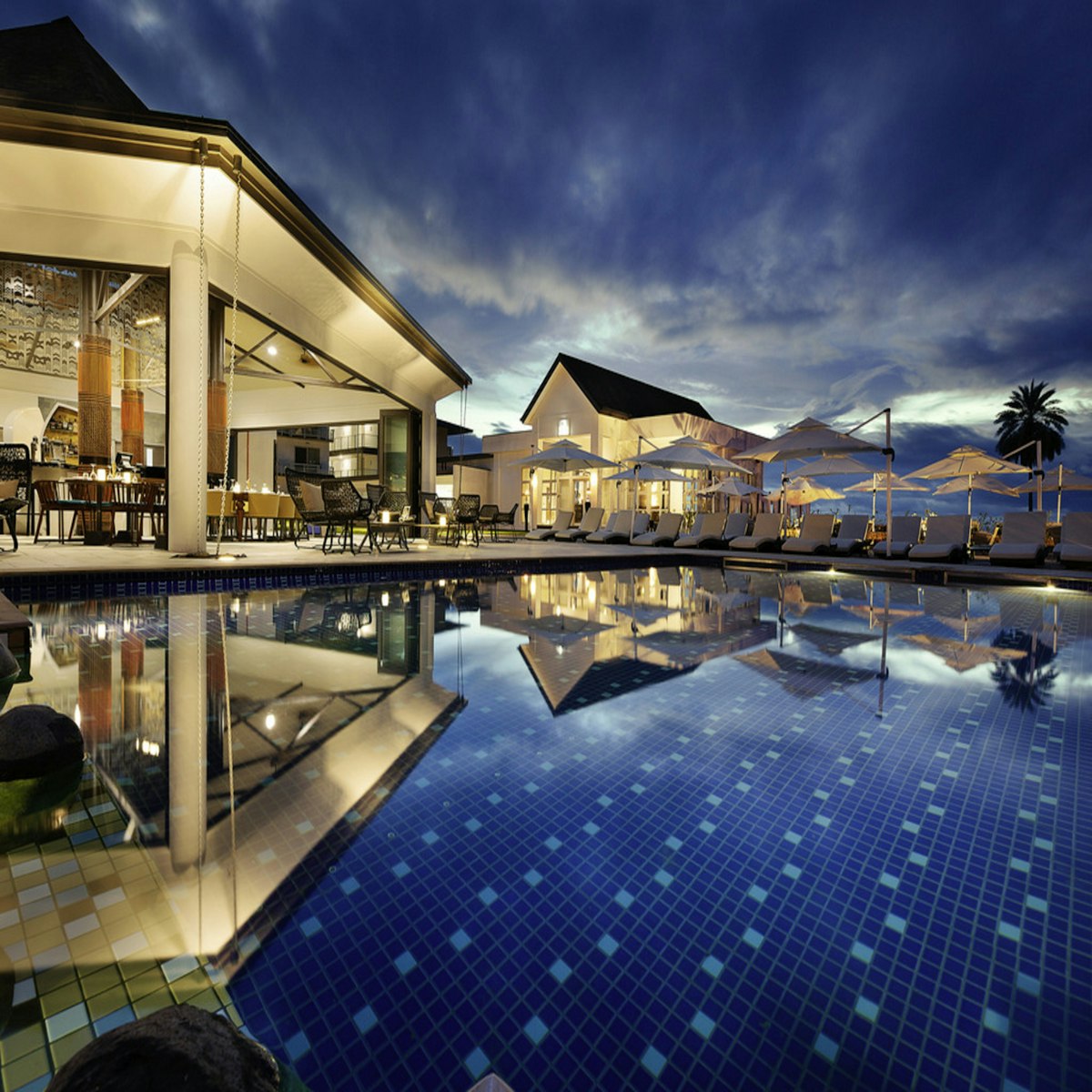

Words like eco-friendly, green, sustainable, conscious, and nature-inspired carry no legal definition and require no evidence. Any hotel in the world can use them. The presence of these words in a property's marketing, without any supporting certification, measurable data, or third-party verification, is the single most common form of greenwashing in the industry.
The test: When a hotel uses these terms, ask immediately: what is the evidence? Which independent body has verified this claim? What specific environmental metrics has the property published? If the answer is another paragraph of evocative language rather than a certification name or a data point, you are looking at vocabulary, not commitment.
Reusing towels and linens does save water and energy, and is a legitimate sustainable practice. But asking guests to participate in a towel reuse programme while changing nothing else about a property's operations is the original greenwash — literally. The hotel saves money on laundry costs while positioning guests as the agents of environmental virtue.
The test: Towel reuse should be a small note at the bottom of a very long list of environmental commitments. If it is the primary or only sustainability initiative a property mentions, it is a flag, not a credential.
Bamboo furniture, natural stone walls, thatched roofs, indoor plants, and rustic timber finishes communicate sustainability powerfully and cost relatively little. Some of the most visually convincing eco-looking properties in the world run entirely on diesel generators, discharge untreated wastewater, import all their food, and employ no local staff.
The test: Ask specifically about energy sourcing (what percentage comes from renewables?), water treatment systems, waste management, and food sourcing. The answers will quickly distinguish properties where natural materials reflect genuine values from those where they reflect a design brief.
Some hotels create their own sustainability certifications — 'Gold Green Star' or 'EcoChoice Award' — awarded either by themselves or by industry bodies they have paid to receive. These look like third-party certifications but carry none of the independent verification that genuine certification requires.
The test: Every certification you see on a hotel's website should be verifiable through the certifying body's own database. GSTC-recognised certifications (Green Key, EarthCheck, LEED, Travelife, Rainforest Alliance) can all be independently confirmed. If a certification cannot be verified through a source other than the hotel's own marketing, do not treat it as evidence of anything.
Carbon offsetting is a legitimate tool when applied to genuine emissions reductions that cannot otherwise be achieved. It is greenwashing when a hotel offsets a small fraction of its emissions through a low-cost scheme without independent verification and uses the resulting 'carbon neutral' label to market itself as solving a problem it is actually continuing to cause.
The test: Ask any hotel making carbon neutral claims to show you their full scope emissions inventory (Scopes 1, 2, and 3), the percentage reduced through operational changes, and the independent verification body for any offsets. Genuine offsets are verified by Gold Standard or Verra's Verified Carbon Standard.
A hotel can publish an elaborate sustainability programme focused entirely on one area — ocean plastics, local artisan partnerships, or a rooftop garden — while ignoring far more significant environmental impacts from its energy consumption, water use, or waste generation.
The test: A genuinely sustainable property addresses all six pillars of environmental responsibility: energy, water, waste, sourcing, biodiversity, and community. If a hotel can speak convincingly about one pillar and vaguely or not at all about the others, the single visible programme is likely the entirety of the commitment.
Elephant riding, swimming with dolphins, visiting tiger temples, and attending animal 'sanctuaries' that allow petting and physical interaction are frequently marketed as conservation experiences. In the overwhelming majority of cases they are neither.
The test: Genuine wildlife conservation experiences do not permit direct interaction with wild animals. They maintain natural behaviours and social structures. They operate with transparent, published relationships with conservation research bodies.
Many hotels mention their 'support for local communities' as a sustainability credential. This support can mean anything from a genuinely structural revenue-sharing arrangement with surrounding villages to a basket of locally made souvenirs sold in the hotel gift shop at a markup.
The test: Ask what percentage of staff are recruited from the local community, what formal revenue-sharing arrangement exists with surrounding villages, and what named community-led conservation or cultural projects the hotel funds.
Train your eye on the language differences first. The contrast is consistent enough that recognising these patterns becomes almost automatic.
| Greenwashing Language | Genuine Sustainability Language |
|---|---|
| "We are committed to sustainability" | "We hold Green Key / EarthCheck / LEED certification, independently verified annually" |
| "Eco-friendly amenities" | "All amenities are refillable and reef-safe; single-use plastic eliminated in 2023" |
| "We support local communities" | "67% of our staff are from within 20km; 15% of revenue goes to the Bali Reforestation Fund" |
| "Carbon neutral property" | "Scope 1 and 2 emissions reduced by 40%; remaining offset via Gold Standard-verified projects" |
| "Close to nature" | "Property sits within a GSTC-recognised biosphere reserve with active rewilding programme" |
| "Sustainable dining" | "100% of produce sourced from named organic farms within 50km; kitchen garden supplies 30% of herbs" |
| "Eco-certified" | "GSTC-recognised certification held since 2019; full audit report published at [URL]" |
| "We care about the environment" | "Marine biologist on staff; coral restoration programme has replanted 4,200 coral fragments since 2021" |
Use this checklist for any property you are considering. Genuine eco luxury properties welcome these questions. Properties with something to hide will respond vaguely.
| Area | Questions to Ask | Red Flag if… |
|---|---|---|
| Energy | What percentage of your energy comes from renewable sources? | Vague answer; no data; 'we use energy-saving bulbs' |
| Water | What is your annual water consumption per guest night? | 'We encourage short showers'; no published data |
| Certification | What is your third-party sustainability certification? | Cannot name a certifying body; uses self-declared label |
| Waste | What percentage of your waste is diverted from landfill? | 'We have recycling bins'; no landfill diversion data |
| Food | Can you tell me the names of the farms that supply your kitchen? | 'Locally inspired' with no specifics |
| Community | What percentage of staff are from the local community? | No data; 'we support local artisans' without specifics |
| Conservation | Do you have a named conservation project with published outcomes? | Generic 'we love nature'; no named project |
| Carbon | Have you completed a Scope 1, 2, and 3 emissions audit? | 'We're carbon neutral'; cannot explain methodology |
| Wildlife | What is your protocol for animal welfare? | Animal interaction permitted; no published welfare standards |
| Transparency | Do you publish an annual sustainability report? | No published report; no verifiable data |
Verification is simpler than most travelers realise. Here is the exact process.
Ask the hotel for the name of their certification body and their certification number. Any genuine certification holder will have this information immediately available. Hesitation or vagueness at this stage is itself a signal.
Every major internationally recognised certification programme maintains a public database of certified properties:
Green Key: Search the property at greenkey.global
EarthCheck: Verified members listed at earthcheck.org under 'Find a Member'
LEED: Full project directory at usgbc.org
Travelife: Certified hotels listed at travelife.eu
Rainforest Alliance: Searchable at rainforest-alliance.org
GSTC Recognition: List of recognised certification bodies at gstcouncil.org
Not all certifications are equal in rigour. Green Key Gold is more demanding than Green Key Bronze. EarthCheck Certified is more demanding than EarthCheck Benchmarked. LEED Platinum is more demanding than LEED Silver. Always note the certification level and the date it was last renewed.
The most effective way to recognise greenwashing is to have a clear picture of what genuine eco luxury actually involves.
The finest eco luxury properties know their energy intensity per guest night, their water consumption ratios, their landfill diversion percentage, and the carbon footprint of their kitchen sourcing. They publish the data because transparency is part of the commitment.
The most seriously committed eco luxury properties employ a full-time sustainability manager or conservation director whose job is the ongoing management and improvement of the property's environmental performance.
One of the most reliable signs of genuine sustainability commitment is that the property is proud to show it to you. The kitchen garden is a guest experience. The coral restoration programme has a slot in the weekly activities schedule. Genuine eco luxury integrates its environmental commitment into the reason guests book.
The most visually spectacular eco luxury properties in the world sit in extraordinary natural settings because they have invested in the protection of those settings. The beauty is not incidental to the sustainability commitment. It is its consequence.
Copy these questions and send them to any property you are considering. The quality and specificity of the responses will tell you far more than any marketing page.
What is your third-party sustainability certification, and which body issued it?
What percentage of your energy comes from renewable sources?
What is your annual water consumption per guest night, and how does that compare to your baseline?
What percentage of your kitchen produce is sourced from within 100km, and can you name the farms?
What percentage of your staff are recruited from the local community?
Do you have a named conservation project, and what are the measurable outcomes to date?
What is your current landfill diversion rate?
Do you publish an annual sustainability report, and where can I access it?
Are all guest products reef-safe and free of single-use plastic?
Have you completed a carbon audit, and what offsets do you use for residual emissions?
Greenwashing diverts investment from genuine sustainability. When a hotel can capture the premium associated with eco credentials through marketing alone, it reduces the commercial pressure on the wider industry to actually invest in achieving those credentials.
Greenwashing erodes consumer trust. When travelers are disappointed by hotels whose eco marketing promised more than their practices delivered, they become sceptical of sustainability claims generally — including the claims of properties that have genuinely earned them.
Greenwashing causes actual environmental harm. A hotel that markets itself as eco-friendly while continuing to operate without renewable energy, without waste management, without responsible sourcing is causing real environmental damage behind an image designed to make that damage invisible.
The EU's Green Claims Directive, which came into force in 2024, prohibits vague environmental claims without substantiation — including in hospitality. The Netherlands saw a 48% reduction in greenwashing cases following regulatory action. The FTC in the United States is actively updating its 'Green Guides' for environmental marketing claims. Hotels operating in major markets will increasingly face legal as well as reputational consequences for unsubstantiated eco claims.
The research involved in verifying a single hotel's sustainability claims properly takes several hours when done thoroughly. Most travelers do not have several hours to invest before every booking decision. That is precisely why Jecoluxe was built.
Our verification process for every property covers:
Certification verification: We confirm the certification name, certifying body, level, and current validity directly through the certifying body's own database.
Environmental performance assessment: We review published sustainability reports and key environmental metrics including energy intensity, water consumption, waste diversion, and sourcing provenance.
Community benefit evaluation: We assess local employment percentages, revenue sharing arrangements, and community partnership structures.
Conservation contribution audit: We evaluate named conservation programmes against published outcomes and verify partnership relationships.
Guest experience quality verification: Sustainability credentials without genuine luxury quality do not qualify for listing.
In a growing number of jurisdictions, yes or it is becoming so. The EU's Green Claims Directive prohibits vague, unsubstantiated environmental claims in commercial communications. In the UK, the Competition and Markets Authority's Green Claims Code provides enforceable standards. However, enforcement in hospitality remains inconsistent, and the most reliable protection for travelers remains the direct verification of certifications.
Greenhushing is the practice of deliberately understating or concealing genuine sustainability commitments — usually because a brand fears scrutiny. It creates a similar problem: if genuine certifications are not communicated, travelers cannot reward the right properties with their booking decisions. The best properties neither greenwash nor greenhush — they communicate their credentials clearly with evidence.
Yes, and this is common. Many properties have made genuine commitments in one or two areas while overstating the overall environmental profile in their marketing. The most important discipline is to evaluate claims area by area rather than accepting or rejecting a property's environmental identity wholesale.
Not consistently. Booking.com's sustainability badge was found by Dutch authorities in 2024 to be potentially misleading because it was based largely on self-reported data. The safest approach is always to verify the underlying certification directly, or to use a platform like Jecoluxe that verifies properties before listing.
Document what you observe. Write a detailed, factual review on multiple platforms naming specific discrepancies. If the hotel holds a certification that you believe is being misrepresented, report your observations to the certifying body. Sharing your experience helps others make better-informed decisions.
The gap between a hotel that genuinely invests in environmental responsibility and one that invests in environmental imagery is large. The former has a measurably better environmental impact, a more committed workforce, a more meaningful relationship with its surrounding community, and — almost always — a more extraordinary guest experience.
Once you know the patterns, greenwashing is not difficult to identify. The vague language, the unverifiable certifications, the cherry-picked story, the towel reuse sign that substitutes for an energy policy: these are consistent enough that exposure to them once makes them recognisable everywhere.
Explore the verified eco luxury properties in the Jecoluxe directory. Your next trip deserves to be exactly what it claims to be.

Travel - Apr 15, 2026

Certifications - Mar 20, 2026

Hotels - Apr 01, 2026

Travelers - Apr 05, 2026

Reader Comments
Elena Vasquez
April 17, 2026
This is the most comprehensive greenwashing guide I have ever read. The 8 tactics section is incredibly useful — I recognised at least three of these from hotels I have stayed at. Sharing this with everyone I know who travels.
Marcus Chen
April 17, 2026
The language comparison table is brilliant. I have been reading hotel websites differently ever since. The difference between 'we care about the environment' and having a marine biologist on staff is stark.
Leave a Comment